 Doody
DoodyBristol Stool Scale explained (types 1–7)
The Bristol Stool Scale sorts stool into seven types by shape and consistency. Types 1–2 point toward constipation, 3–4 are the usual healthy target, and 5–7 move toward loose stool and diarrhoea. Doctors use it because form tracks colonic transit better than vague words like “normal”.

The seven types in plain language
Type 1: separate hard lumps. Type 2: lumpy sausage. Type 3: sausage with cracks. Type 4: smooth soft sausage (often called ideal). Type 5: soft blobs with clear edges. Type 6: fluffy pieces with ragged edges. Type 7: watery, no solid pieces.
You will not memorise every description on day one. Learn the buckets: hard, formed, soft, liquid.
How Doody maps Bristol without the wall chart
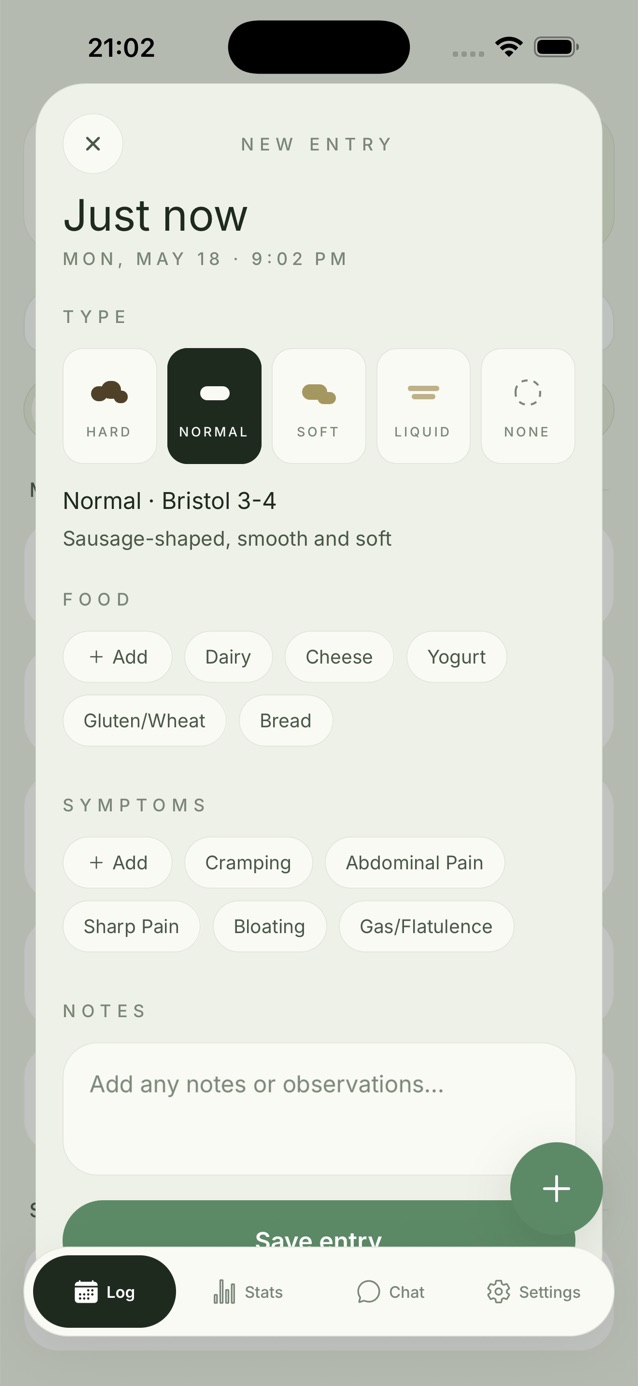
Doody’s New Entry screen shows Hard, Normal, Soft, Liquid, and None. Hard covers Bristol 1–2, Normal 3–4, Soft 5–6, Liquid 7. Under the tiles you still see the clinical range, for example “Normal · Bristol 3–4”.
That keeps logging fast while your history stays compatible with what a clinician expects to hear.
Log the next bowel movement in Doody
Free Bristol logging on iPhone. Upgrade later if you want Doody’s Read, full history, and CSV export.
Download on the App StoreUsing Bristol types to spot change
A single type 6 after a rich meal is noise. A week that shifts from mostly 4s to mostly 1–2s or 6–7s is signal. Stats in Doody show the mix as percentages so you can see drift without scrolling every entry.
Rome IV IBS subtyping also leans on stool form. If most of your abnormal stools are hard, the conversation sounds different from mostly liquid stools. Your diary is how you show that.
FAQ
What Bristol type is considered normal?
Types 3 and 4 are generally treated as normal formed stool, with type 4 often described as ideal. Your personal baseline still matters more than a single perfect day.
Do I need photos of stool?
Not for Doody’s core logging. Type labels and notes are enough for most diaries. Follow your clinician’s advice if they ask for photos for a specific concern.