 Doody
DoodyHow to track constipation and diarrhoea
Log hard stools and liquid stools in the same diary, and mark days with no bowel movement. That single habit shows whether you live mostly at one end of the scale or swing between both within the same fortnight.

Map the ends of the Bristol scale
Constipation tracking leans on types 1–2 and on None days. Diarrhoea tracking leans on types 6–7 plus urgency notes. If you only log the dramatic liquid days, constipation stretches disappear from the record.
Doody’s Hard and Liquid tiles exist so you do not have to remember type numbers when you are miserable.
Timing and streaks
“When you go” charts show whether liquid stools cluster at night or after breakfast. Streaks and heatmaps show multi-day gaps that feel like “I go fine” until you count them.
Share both ends of the pattern with your clinician if you are being assessed for IBS-M or for treatment that can tip you from one extreme to the other.
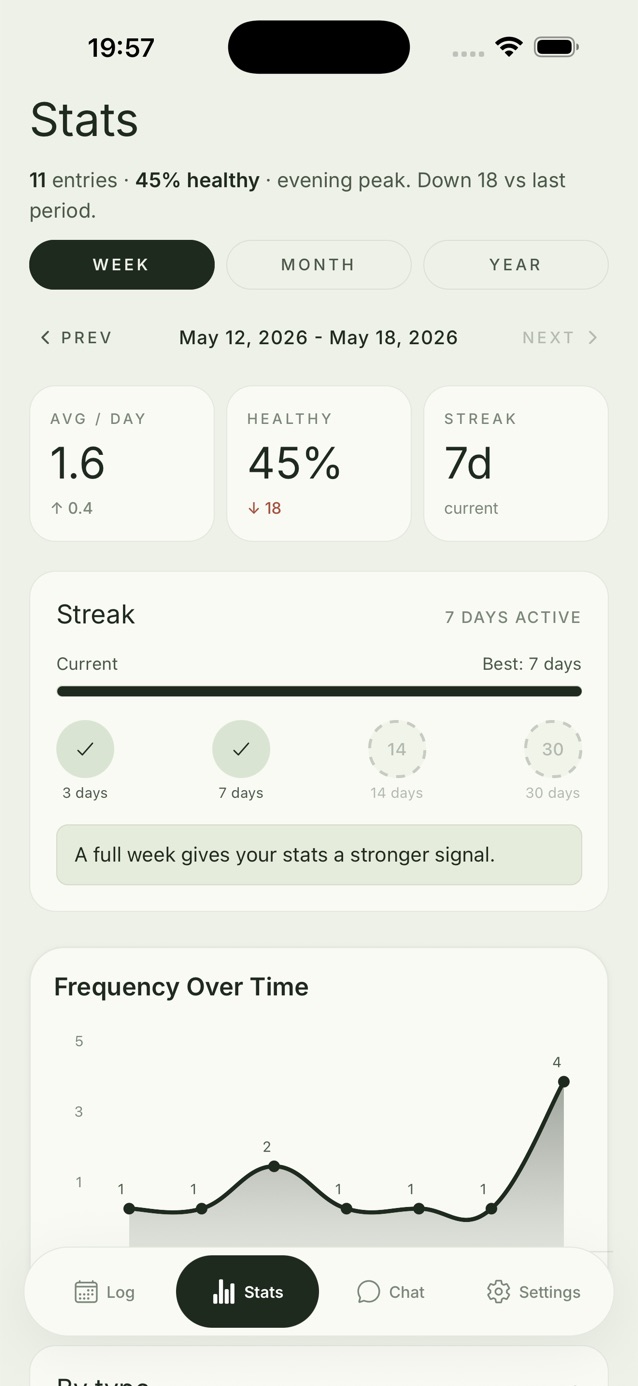
Log the next bowel movement in Doody
Free Bristol logging on iPhone. Upgrade later if you want Doody’s Read, full history, and CSV export.
Download on the App StoreRed flags
Black tarry stools, maroon or bright red blood, severe dehydration, high fever, or sudden constipation with vomiting need urgent care. A tracker is for trends, not emergency triage.
FAQ
What counts as diarrhoea in a diary?
Frequent loose or watery stools (Bristol 6–7) over a day or more. Note urgency and night stools; those details change how urgently clinicians investigate.
What counts as constipation in a diary?
Infrequent stools, hard pellets (Bristol 1–2), straining, or a sense of incomplete emptying. None days help document frequency.